
One homeowner had replaced their dishwasher, a bathroom faucet set, and several toilet flush valves over the same two-year stretch. Different brands, different failures, same house. They chalked it up to bad luck…or maybe just the hard water.
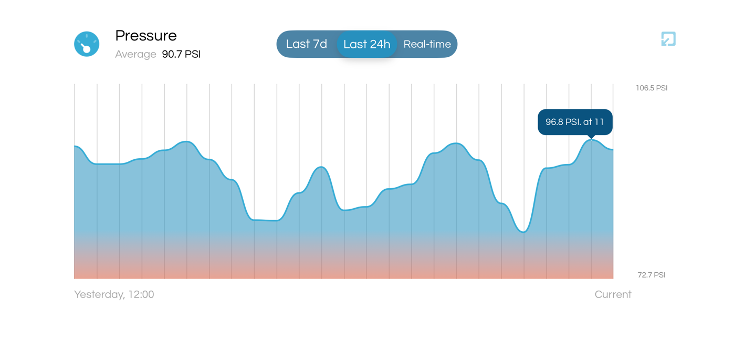
After installing continuous water pressure logging, they were pointed to a different culprit. Their incoming supply pressure was averaging 96 psi, well above the 80 psi threshold that most appliance manufacturers set as the maximum in their warranty terms.
Every cycle the dishwasher ran, every time a faucet opened, the components were absorbing pressure they weren't designed to handle. Over months and years, that adds up to premature valve wear, seal failure, and eventually the kind of replacements this homeowner kept making.
The underlying cause was a failed pressure regulator (PRV) on the main supply line, no visible signs, no warning, just gradual pressure creep as the regulator lost its ability to hold a setpoint.
We recommended a regulator replacement and continuous monitoring and a new setpoint of 65 psi, well within the safe range for their elevation and supply configuration. The fix cost a fraction of another appliance replacement and now the homeowner will know immediately if pressure starts climbing again.
Recommendations
1. replace the pressure regulator (PRV) through a licensed plumber
2. install continuous PRV monitoring to ensure that the PRV works properly